The Gannets on Heligoland
Helgoland had been on my list for a while. This rocky islet, along with the neighboring Düne (which used to be connected to Helgoland but was separated from it by a storm in 1790), is located in the North Sea, in the German Bight. It belonged to Denmark and the United Kingdom, respectively, but has been German territory since 1890 (fun fact: Heligoland was traded to the British in exchange for Zanzibar). Helgoland is small: it covers just 1.7 km² and has around 1,300 residents. Helgoland attracts tourists because it is not part of the EU’s customs territory, so you can shop tax-free there. However, the island is best known for its red rock formations (Triassic variegated sandstone). Helgoland’s geology is very interesting. What makes Helgoland attractive to nature lovers is the colony of gannets that nest on the red cliffs on the west side. And those gannets were the reason for my visit. Next year, ice and weather permitting, I’ll be photographing the gannets underwater in the Shetland Islands, and I want to combine those photos with the close-up shots I can take on Heligoland, with the goal of eventually creating a project that shows the gannets from multiple perspectives. Since I also want to build my wildlife portfolio in a minimalist style, I had set myself the goal of focusing primarily on low-key and high-key photography.
So, on June 3, I got in the car and headed for Cuxhaven in northern Germany. Ferries to Helgoland depart from there. After a drive of just under six hours, I arrived at my hotel for the night, the Mertinkus Nordseehotel in Cuxhaven. It was a great hotel for a one-night stay, allowing me to take the FRS Helgoline to Helgoland at 11:30 a.m. the next morning without any rush. I parked the car at the Helgoland parking lot operated by Reederei Cassen Eils, which is a 10-minute walk from the pier. After a one-and-a-half-hour crossing, you set foot on Helgoland’s Unterland. The gannets themselves nest on the cliffs of the Oberland, so it’s advisable to book a hotel on the Oberland so you can easily walk to the gannets every day and avoid the stairs from the Unterland to the Oberland. I stayed in a single room at the Mocca-Stuben hotel, which also has a restaurant (reservations required) and served as a good base for my three-night stay.
After checking into the hotel, it was time to strap on my camera bag and walk toward Lummenfelsen, the cliffs where you can find the gannets. There are two cliff outcrops where you can photograph the gannets up close; on one of them, they even nest right up against the fences. You can’t miss it—not least because of the noise made by the gannets and, especially, the guillemots that also nest there. It’s quite a spectacle; give yourself time to let it all sink in.
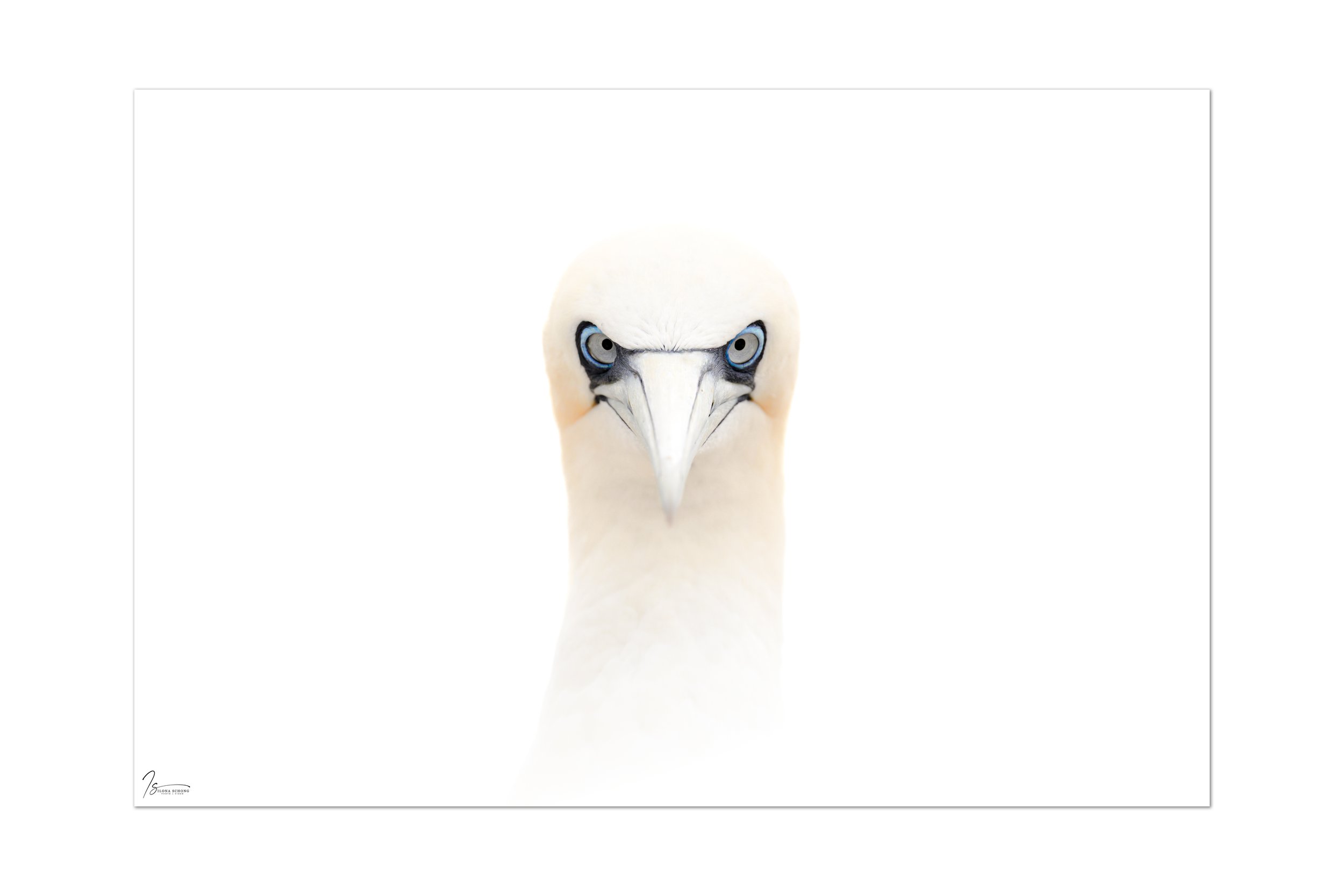
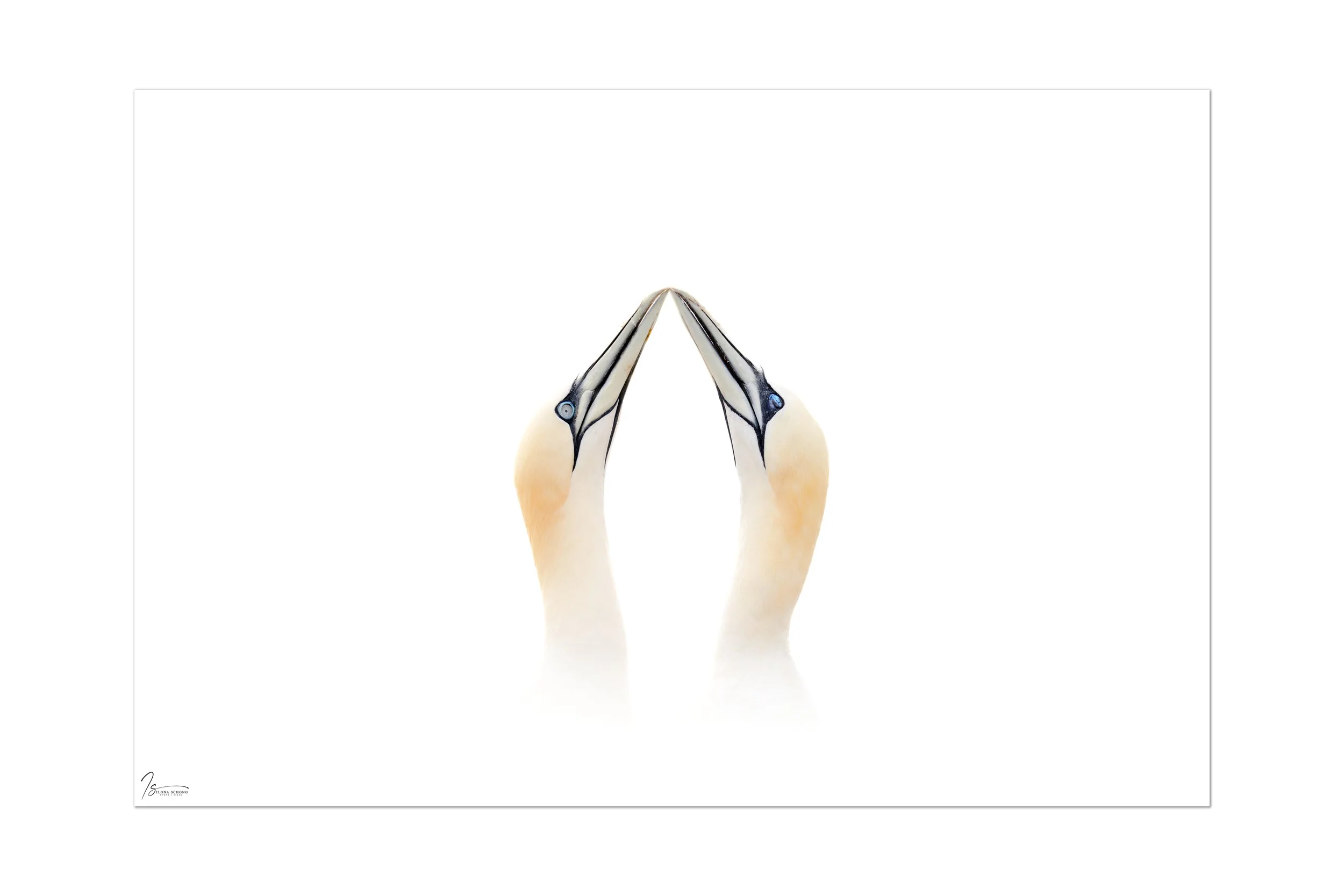
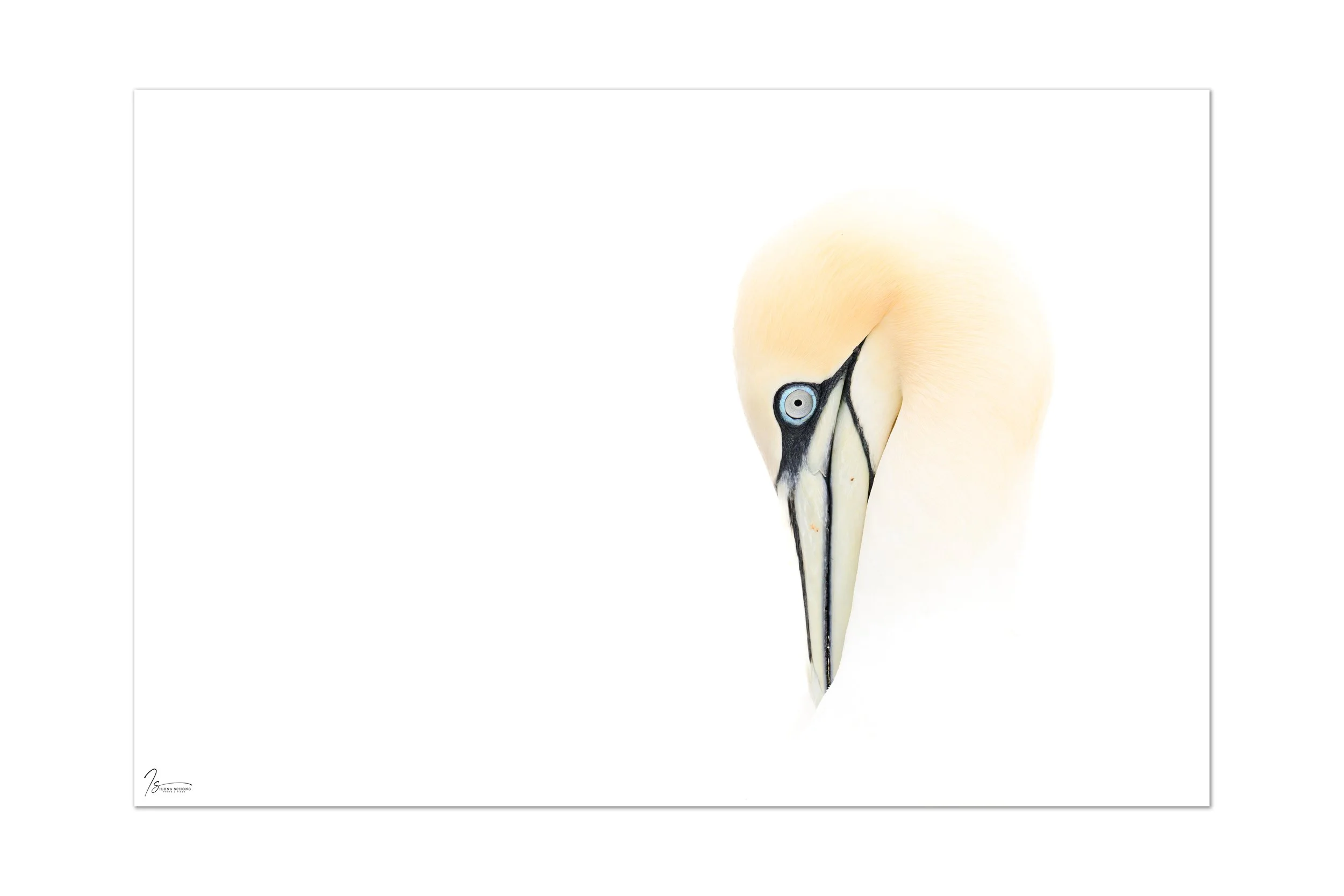
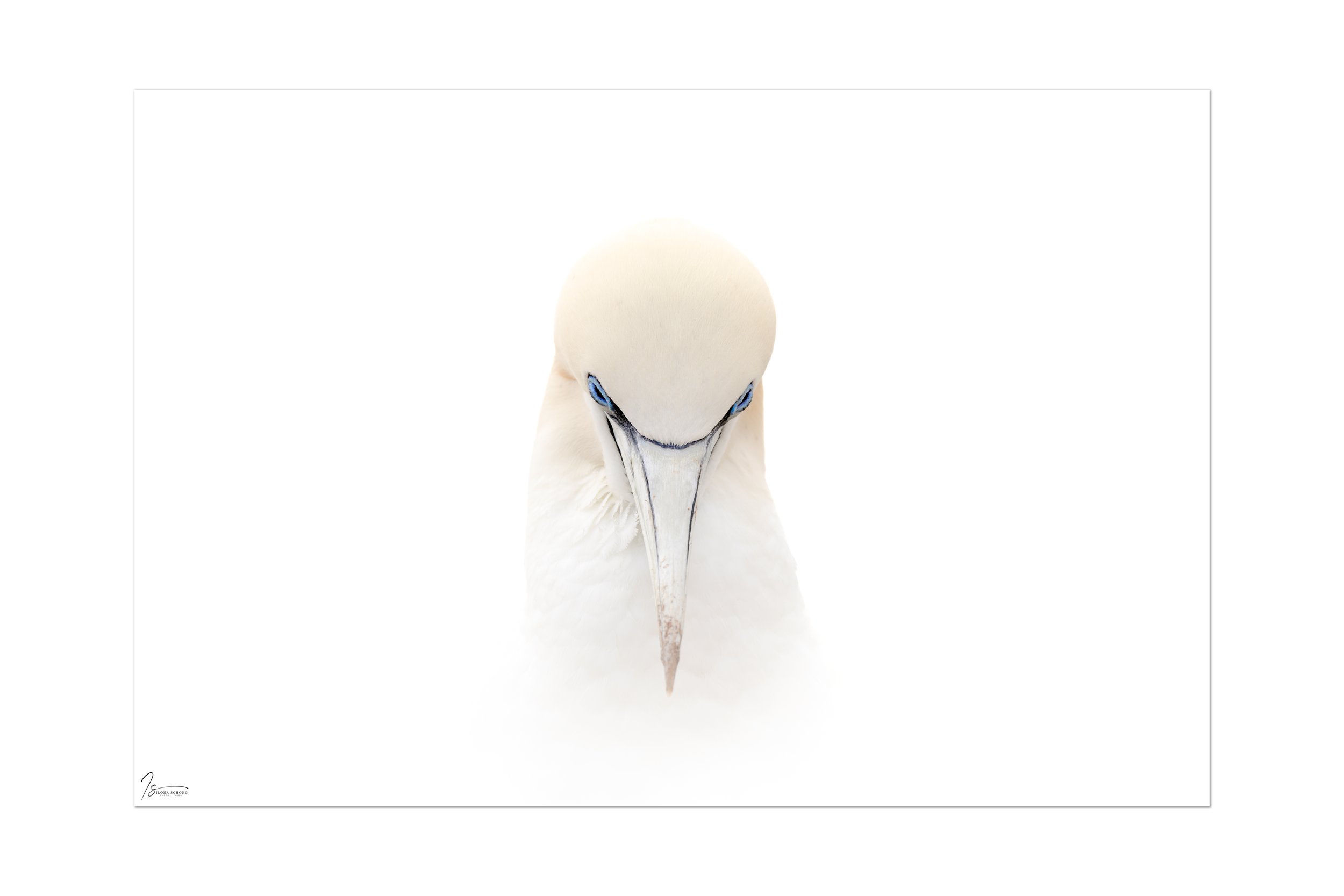
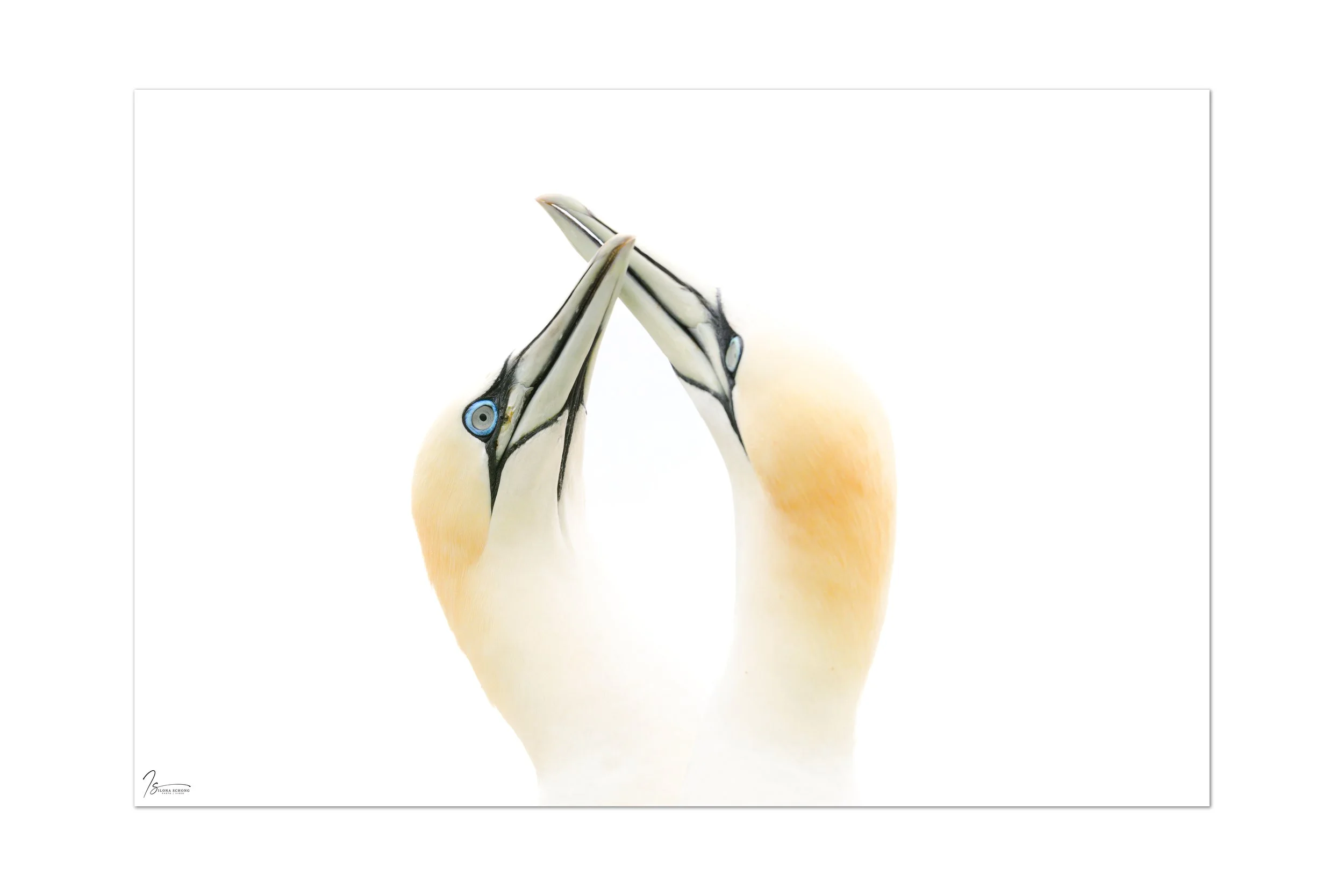
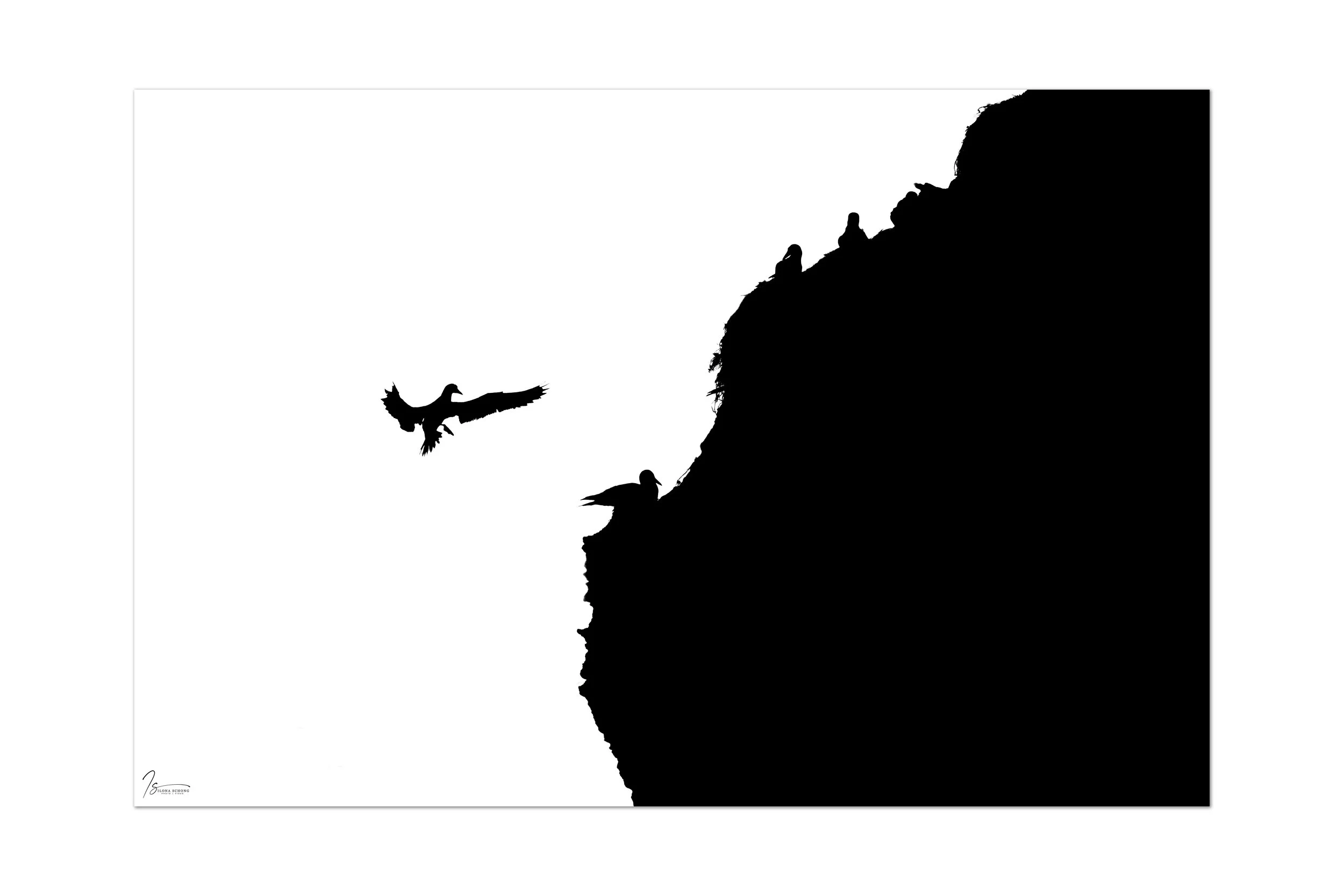
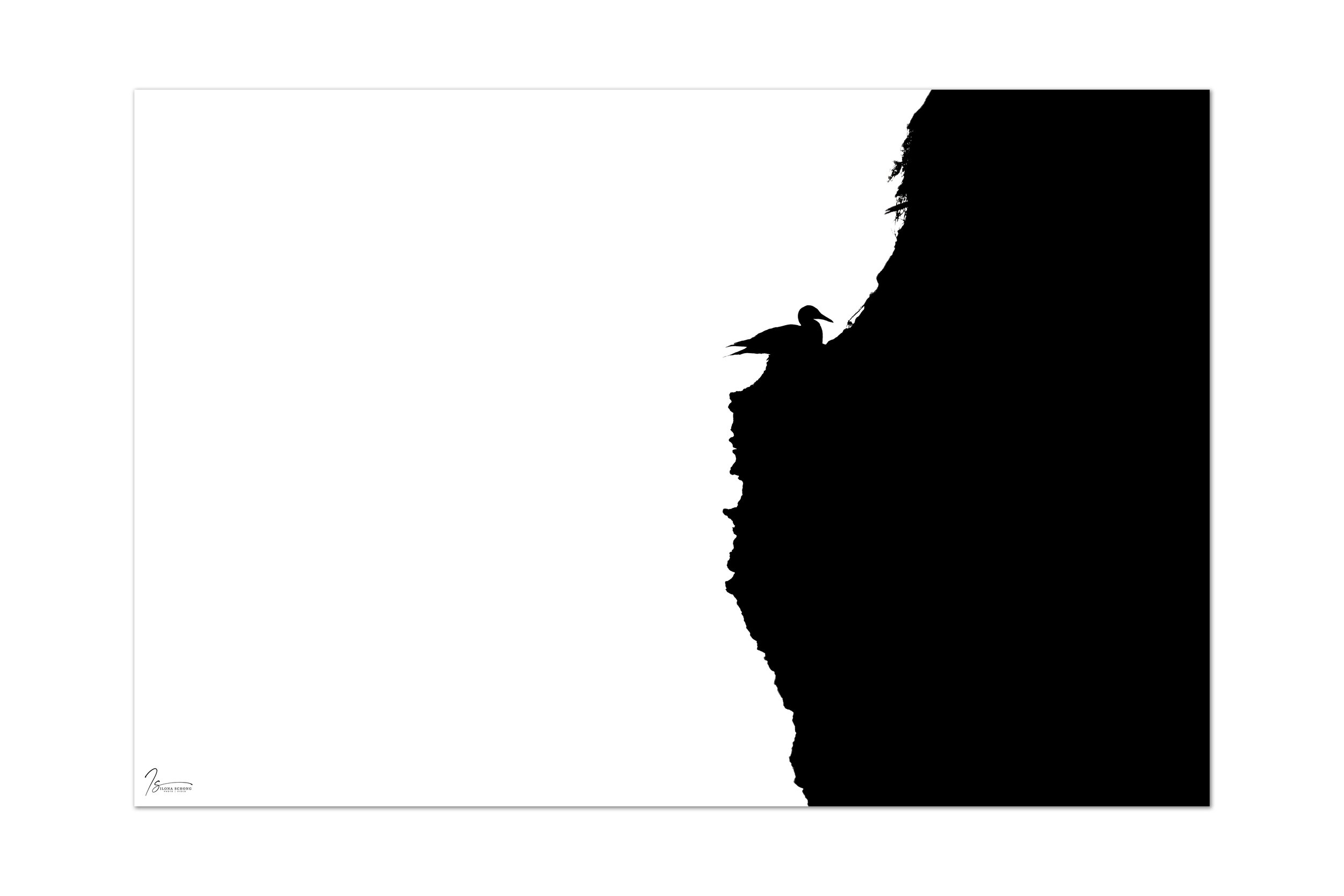
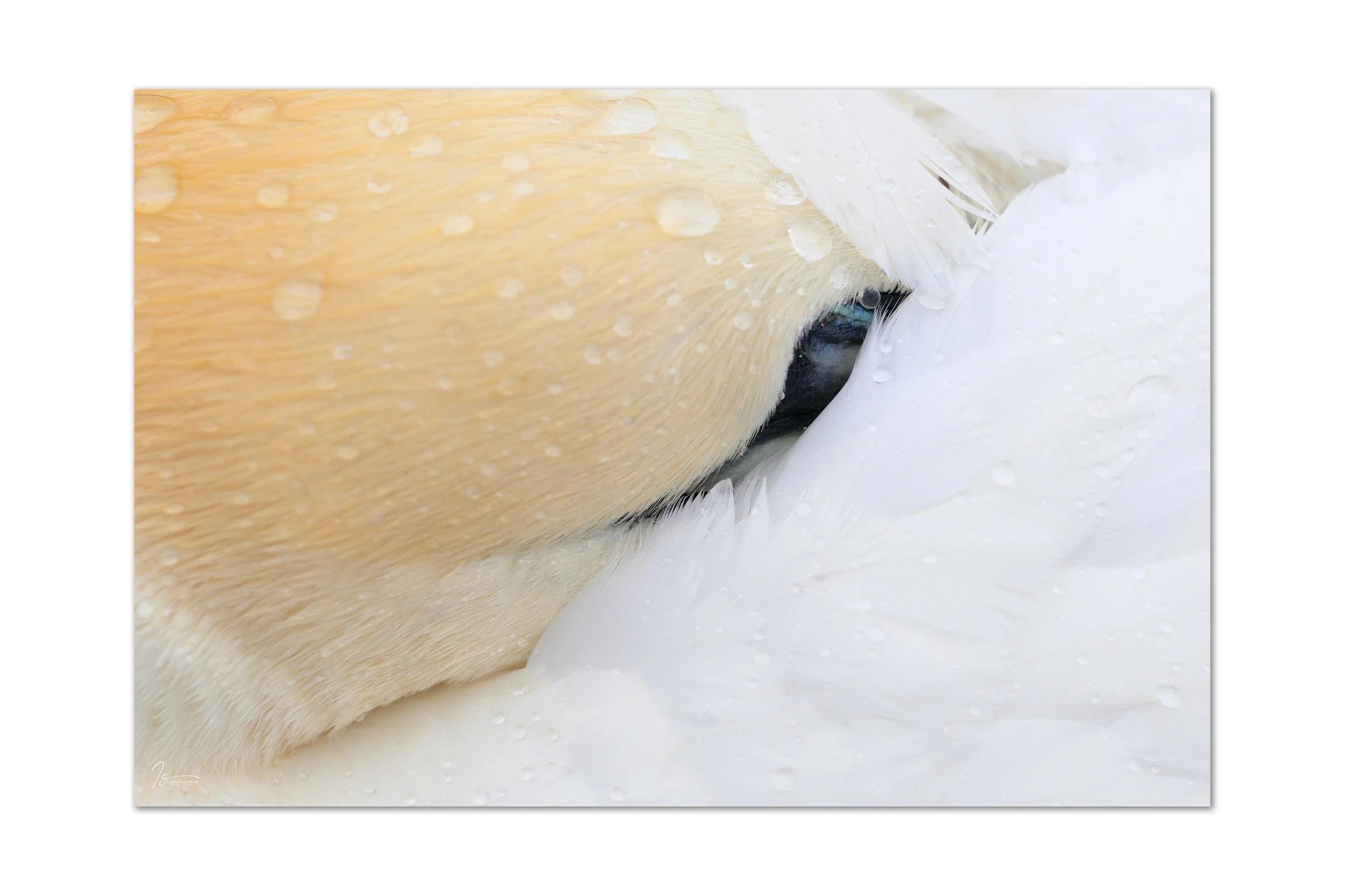
Below are a few high-key photos that are perfect for taking in the middle of the day, provided there is a nice, dense, even cloud cover. This makes it an ideal activity on a heavily overcast day.
They are overexposed by 2 or 2.3 stops.
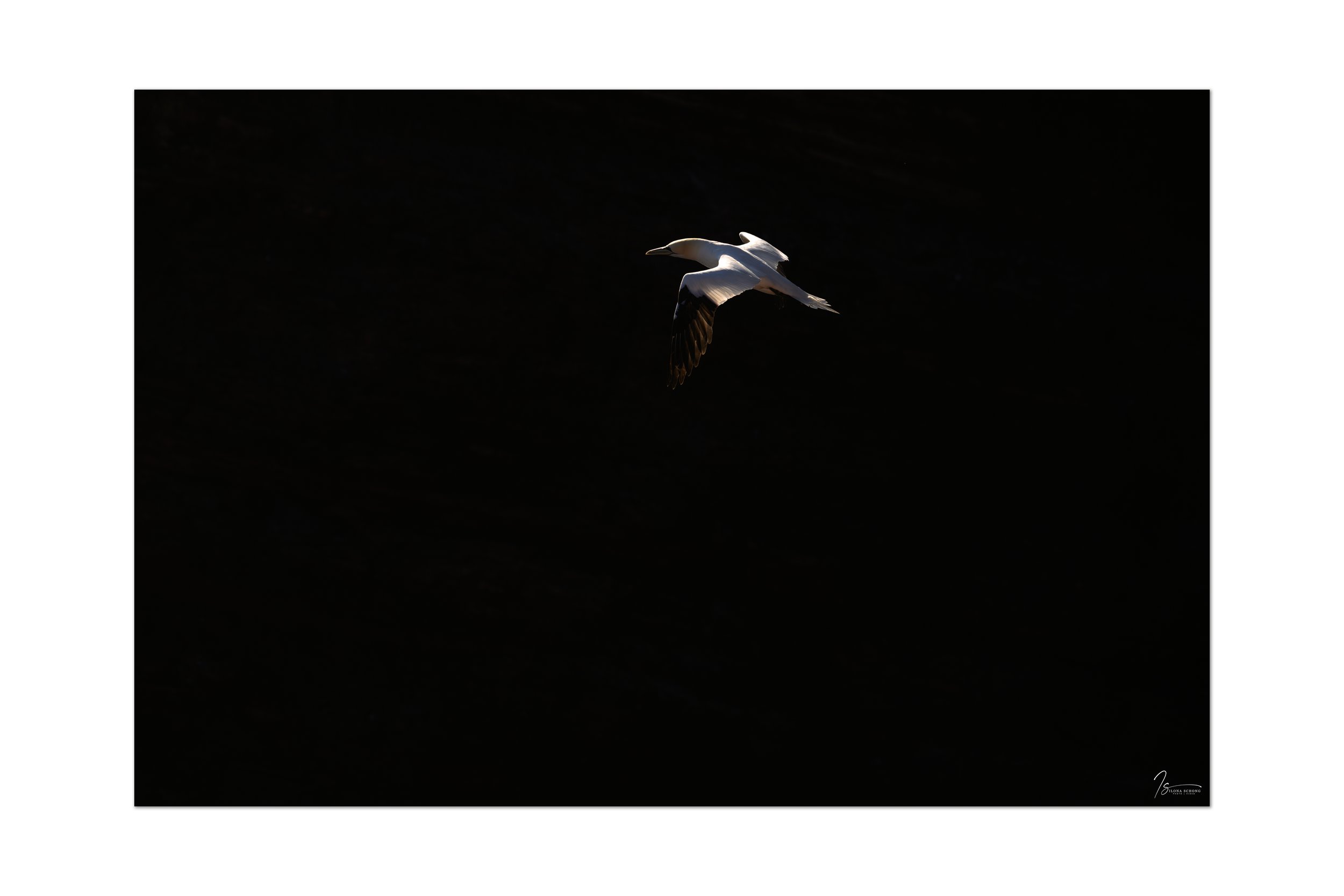
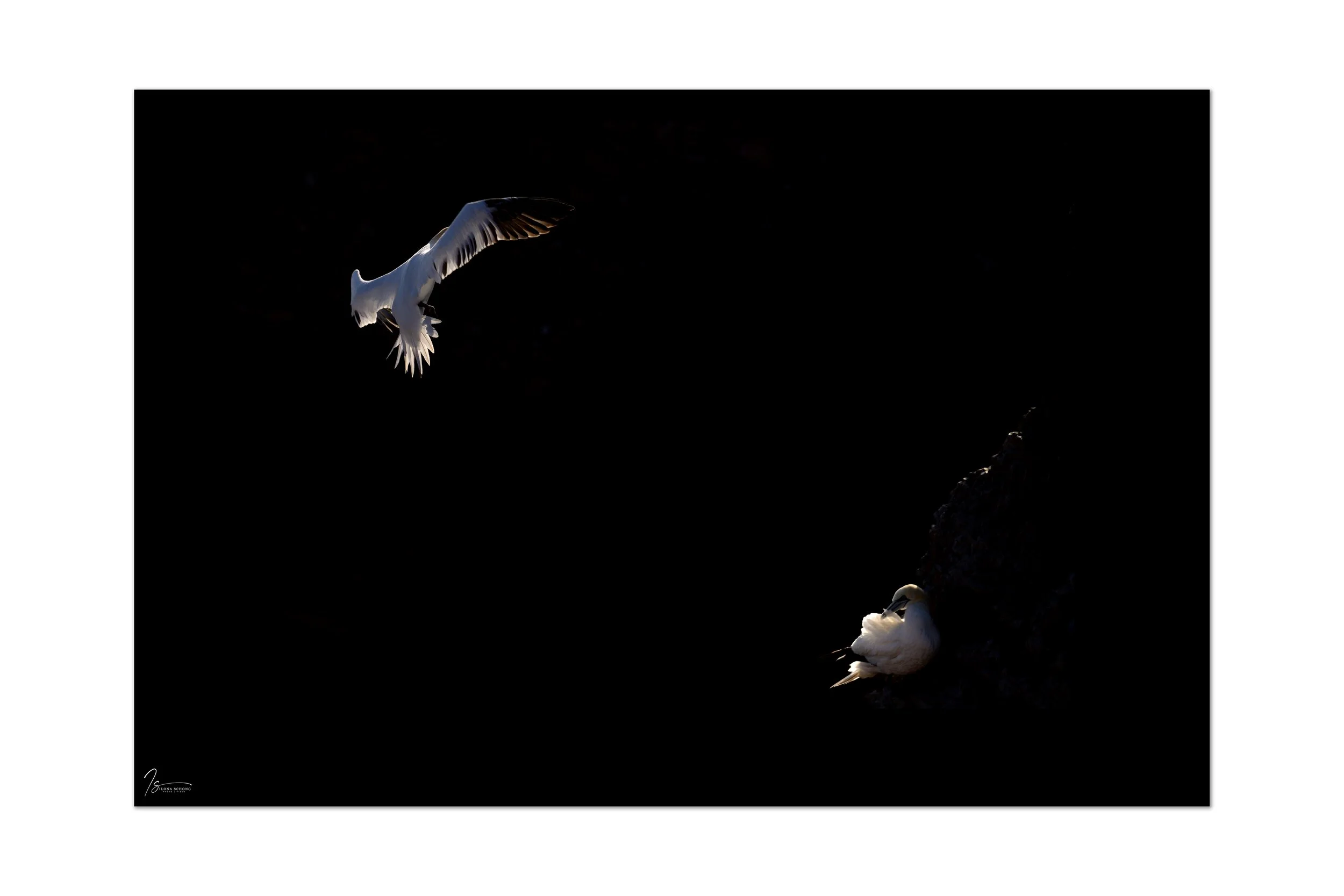
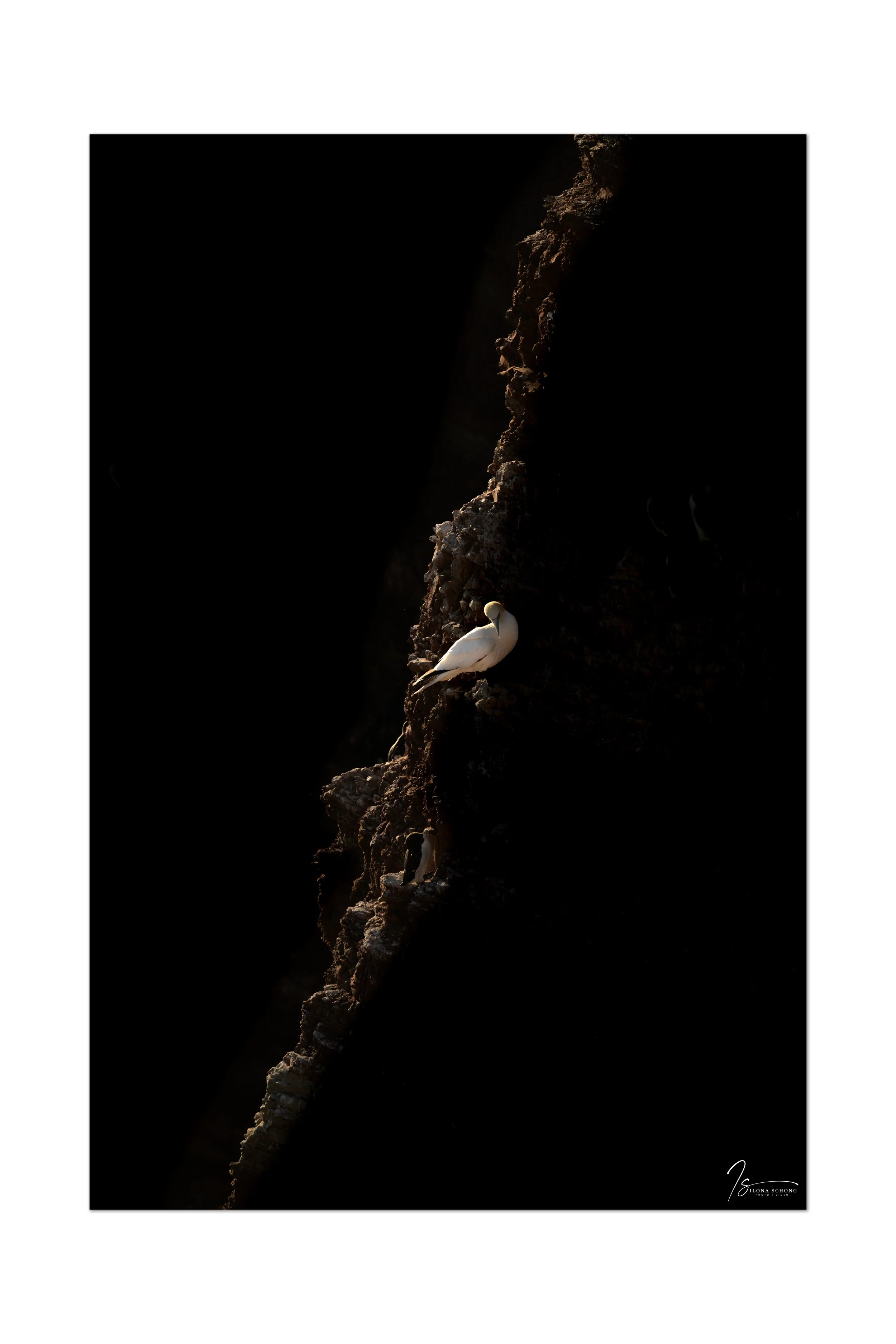
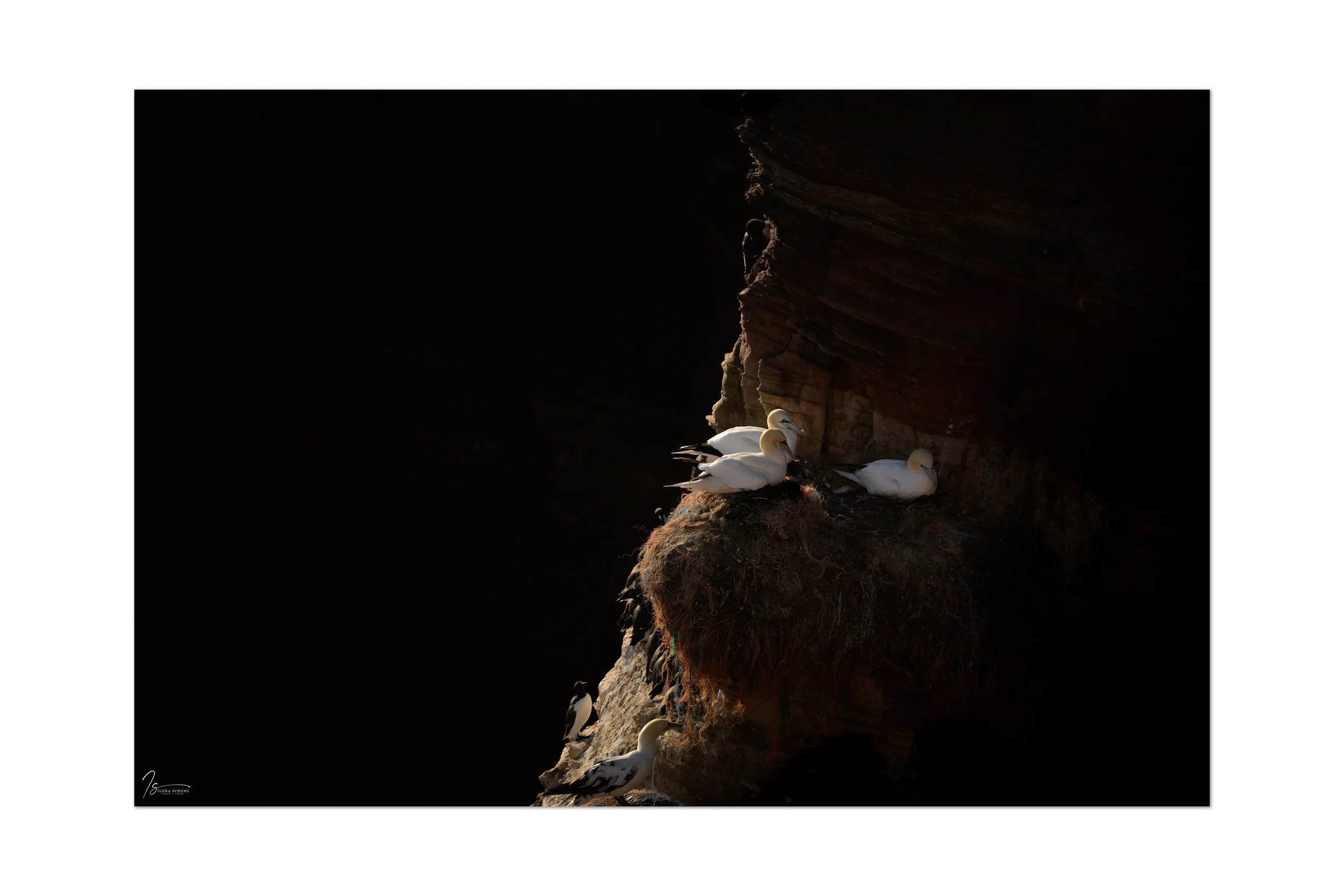
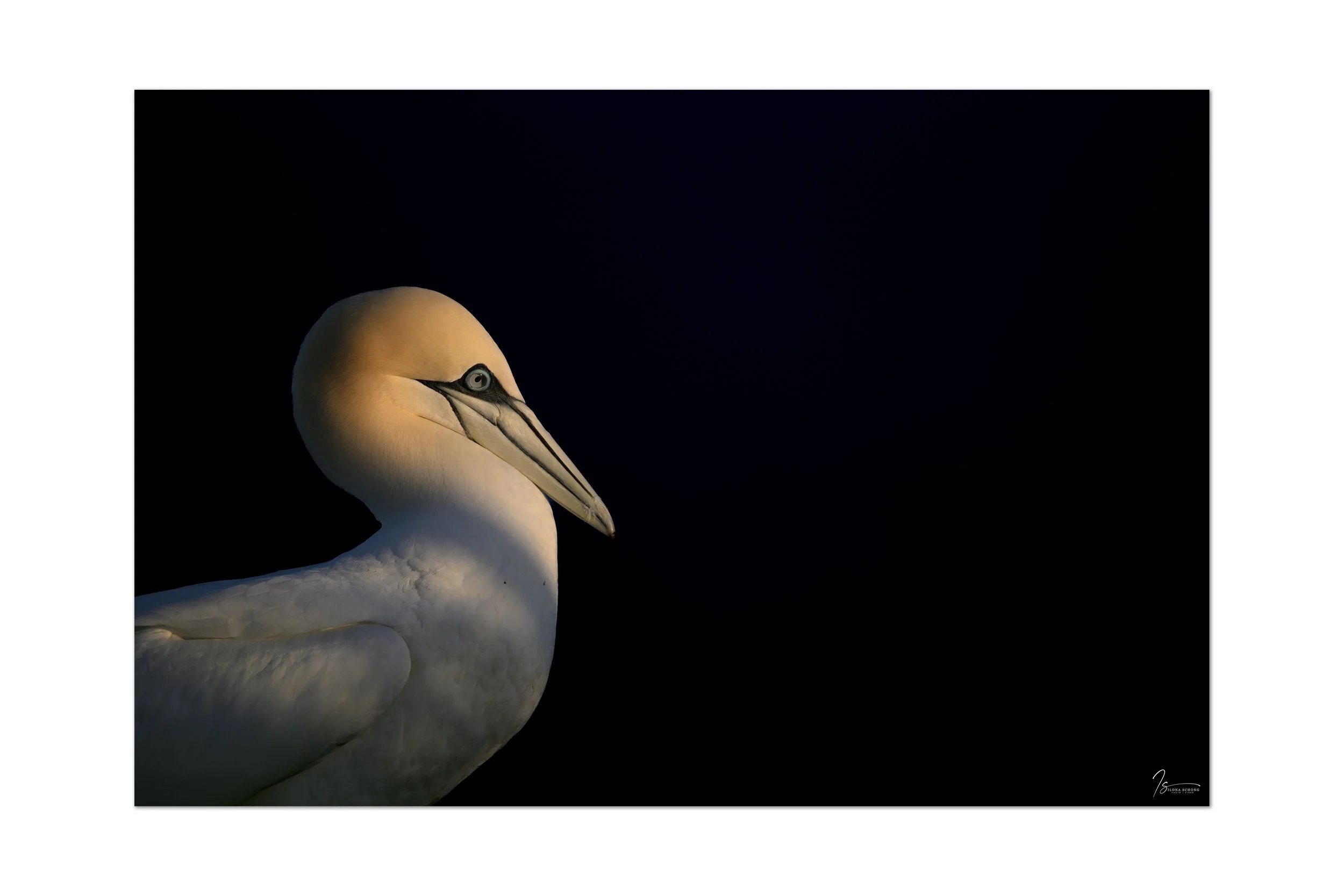
It’s very easy to take low-key photos on Helgoland by standing on the path leading to the first cliff spur on a sunny afternoon, where you can use the shadow cast by the rock formation behind you, while the gannets catch the sunlight. The edge of a cliff where gannets and guillemots nest also catches some light at first, which can result in an interesting low-key photo. I underexposed by two to three stops.
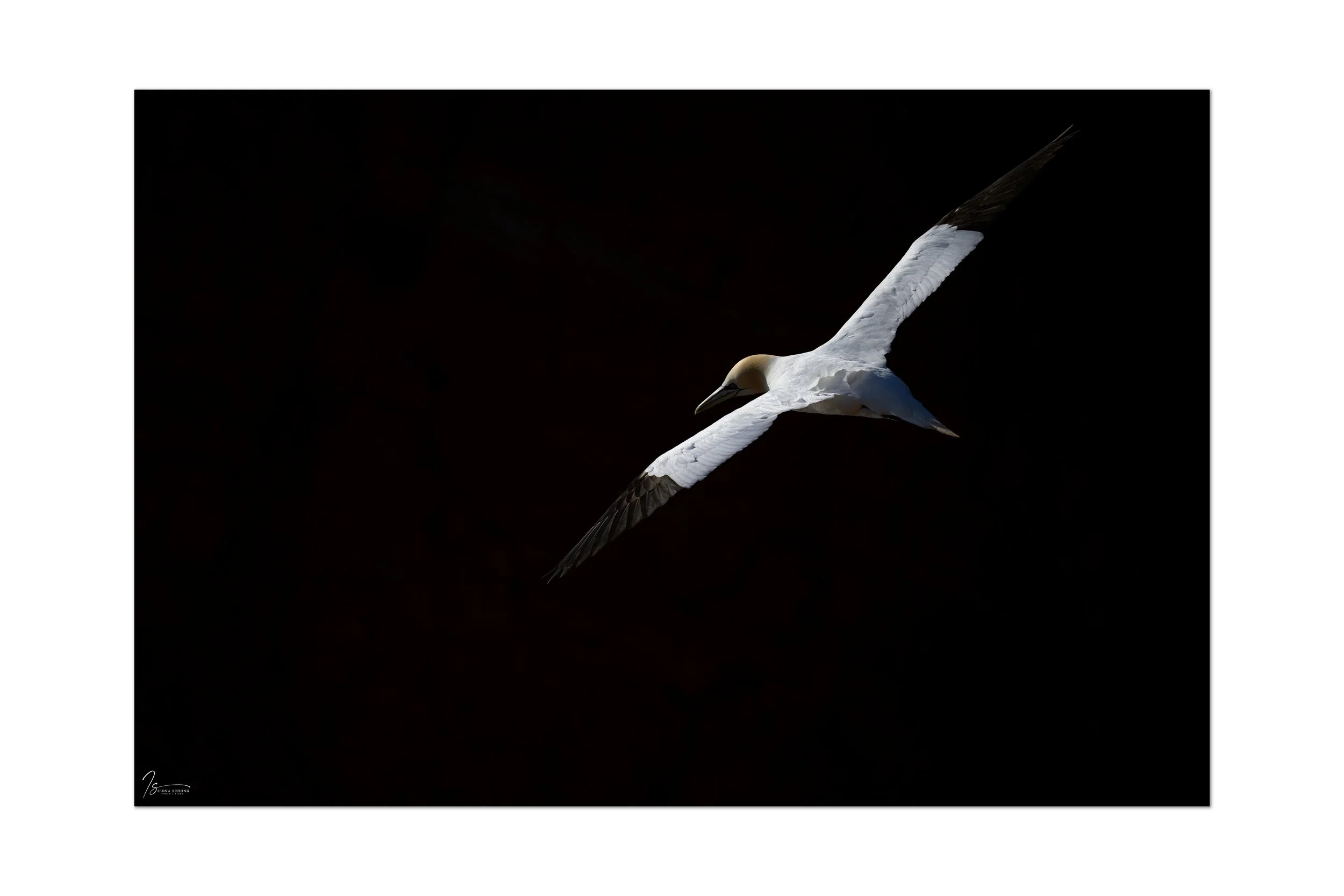
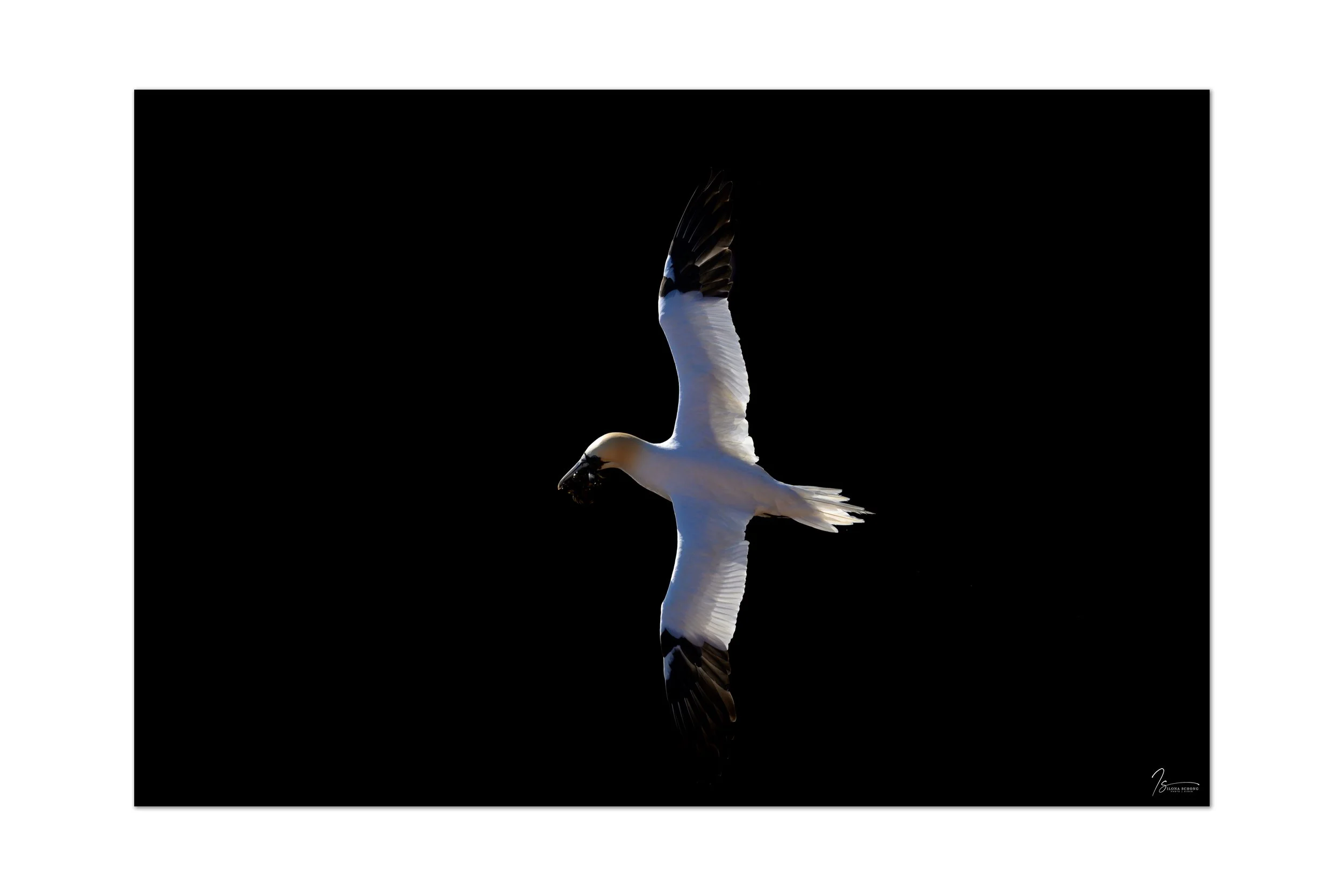
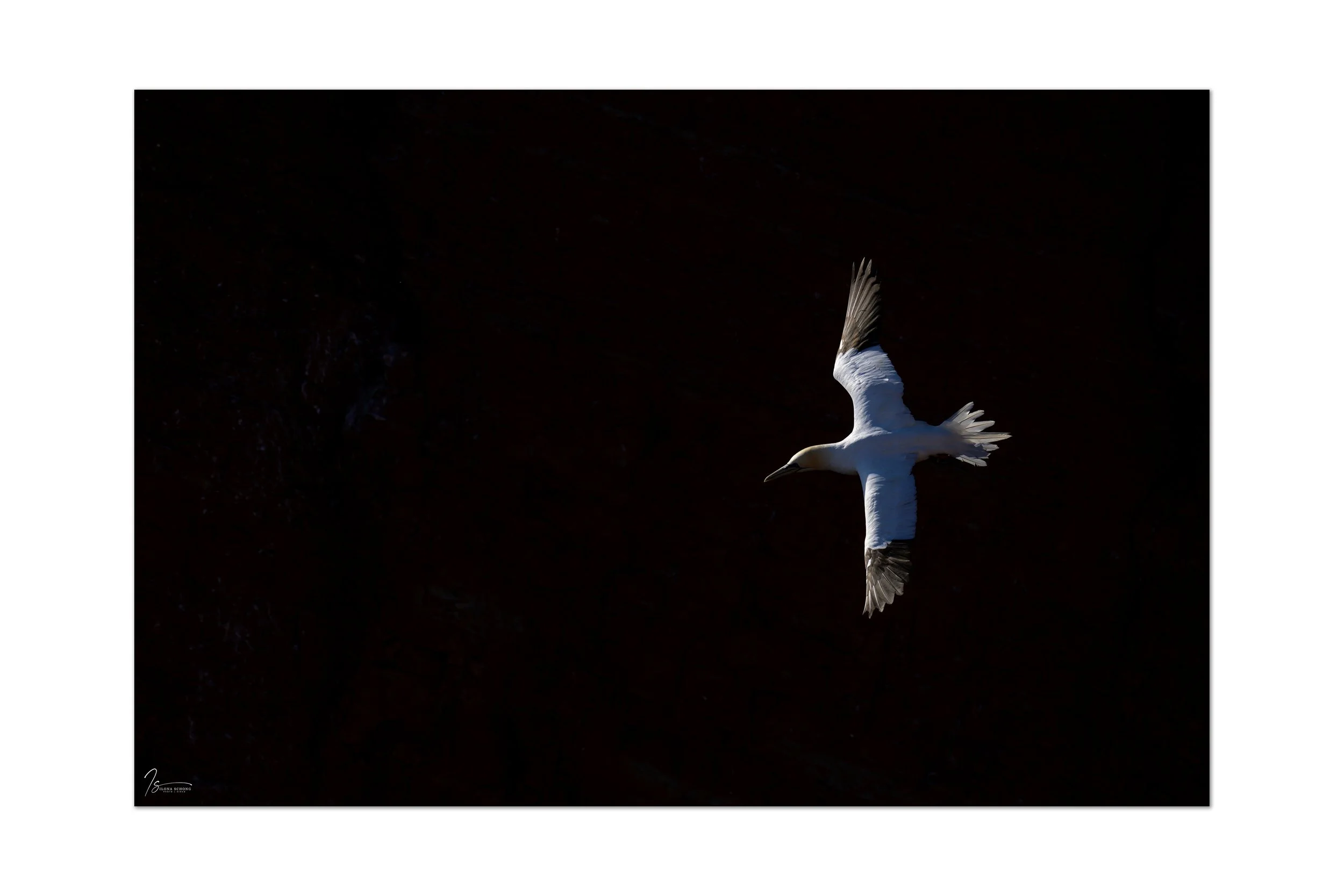
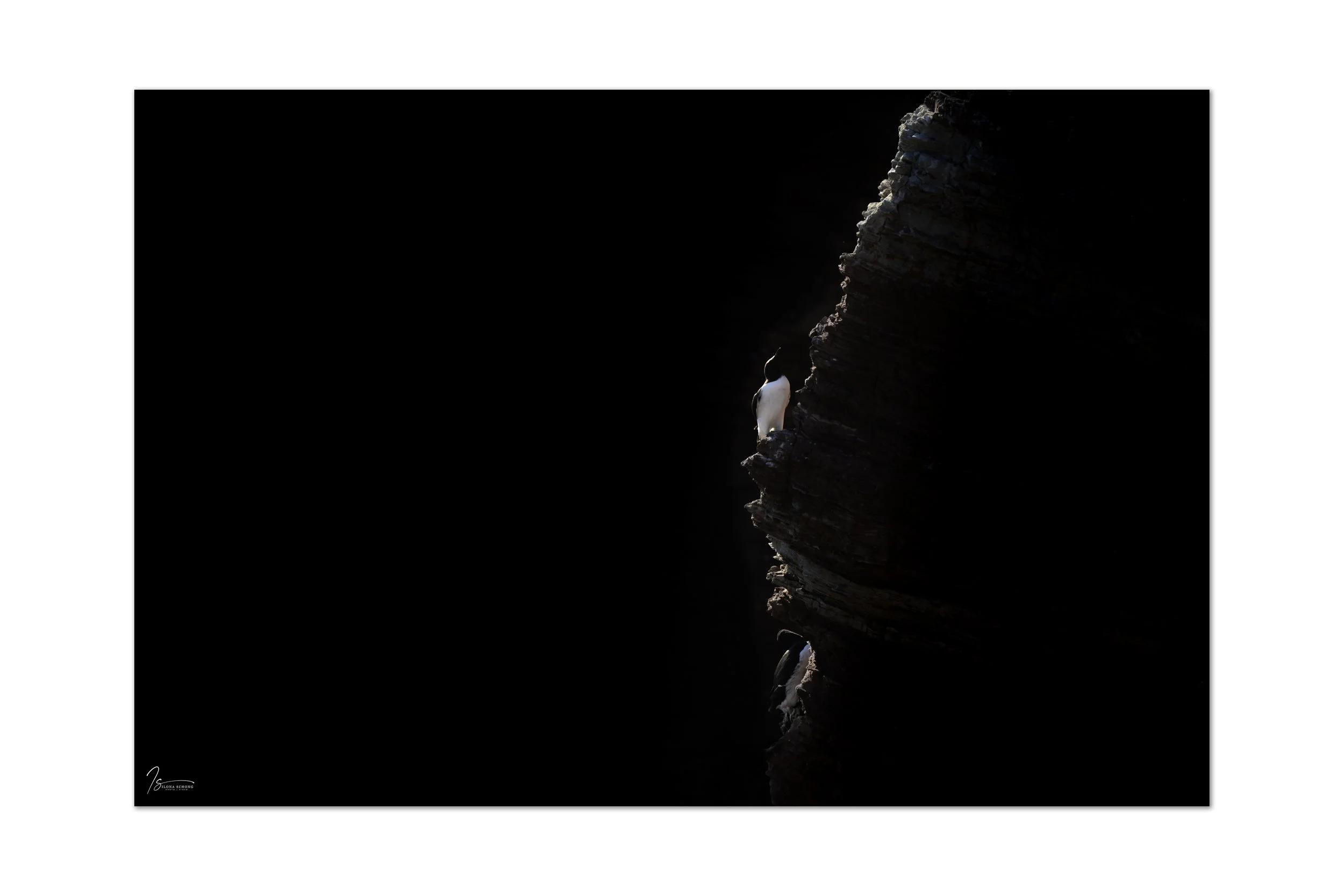
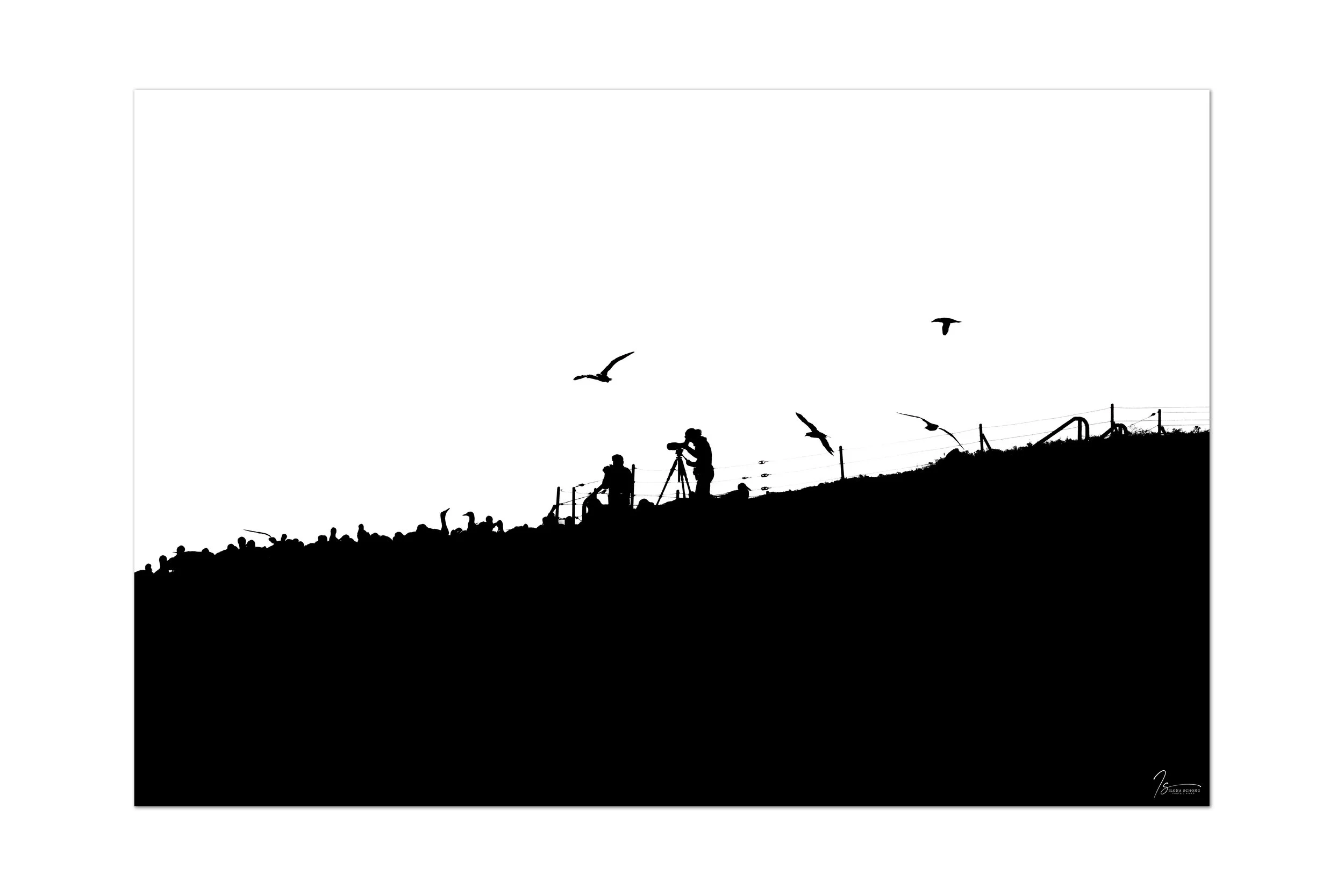
Another way to create a very minimalist image is to photograph silhouettes. A sea completely overexposed by the sun works well as a background here, but you’ll have to experiment to find the settings that produce the desired effect—and that sometimes results in unusual combinations. For example, the settings for “The Birder” were 1/1250, f/22, ISO 64, and -3.67 exposure compensation; though I should note that—in hindsight—I might have been better off choosing a lower f-number and a faster shutter speed. During post-processing, I set the highlights and whites to +100 and the shadows and blacks to -100.
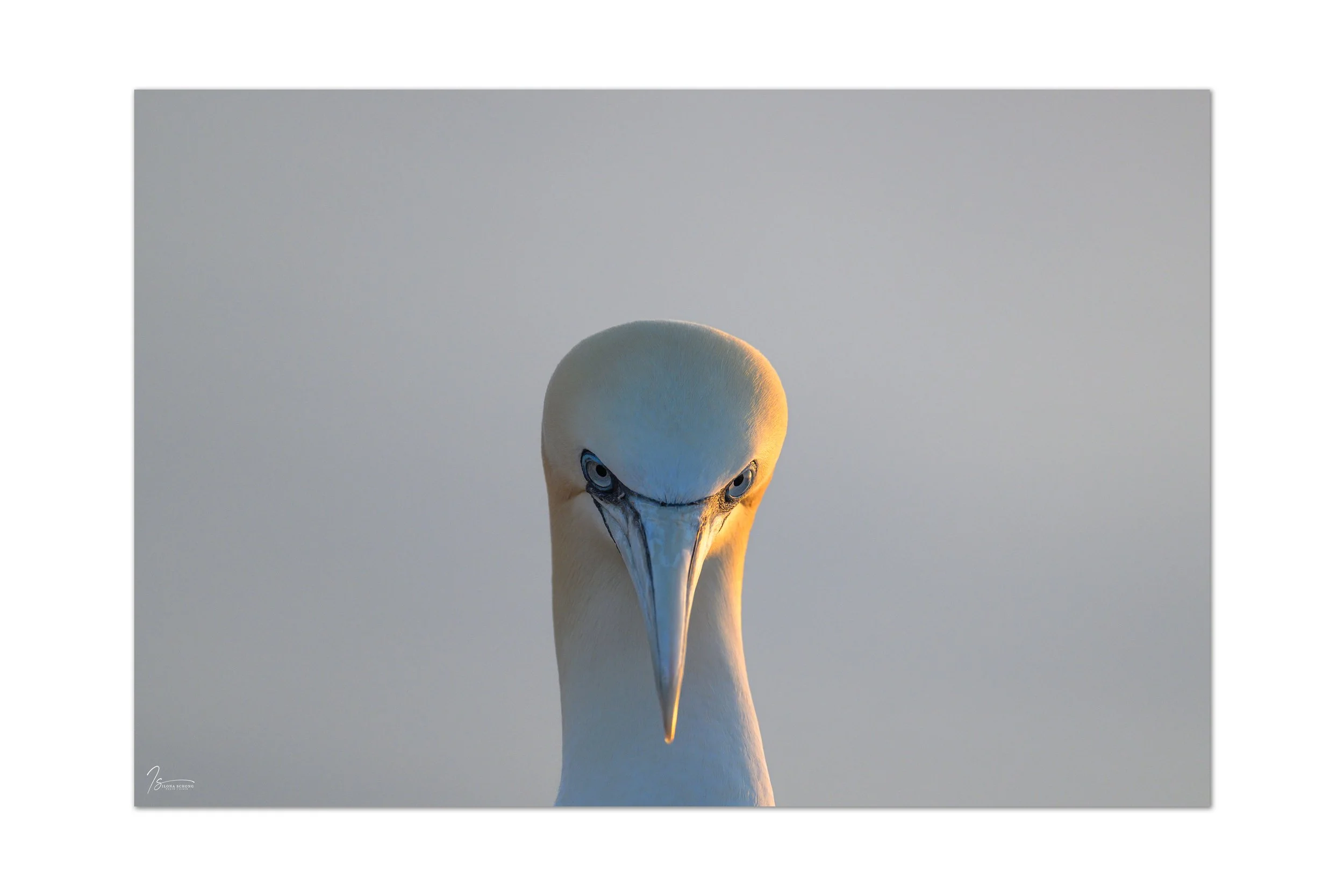
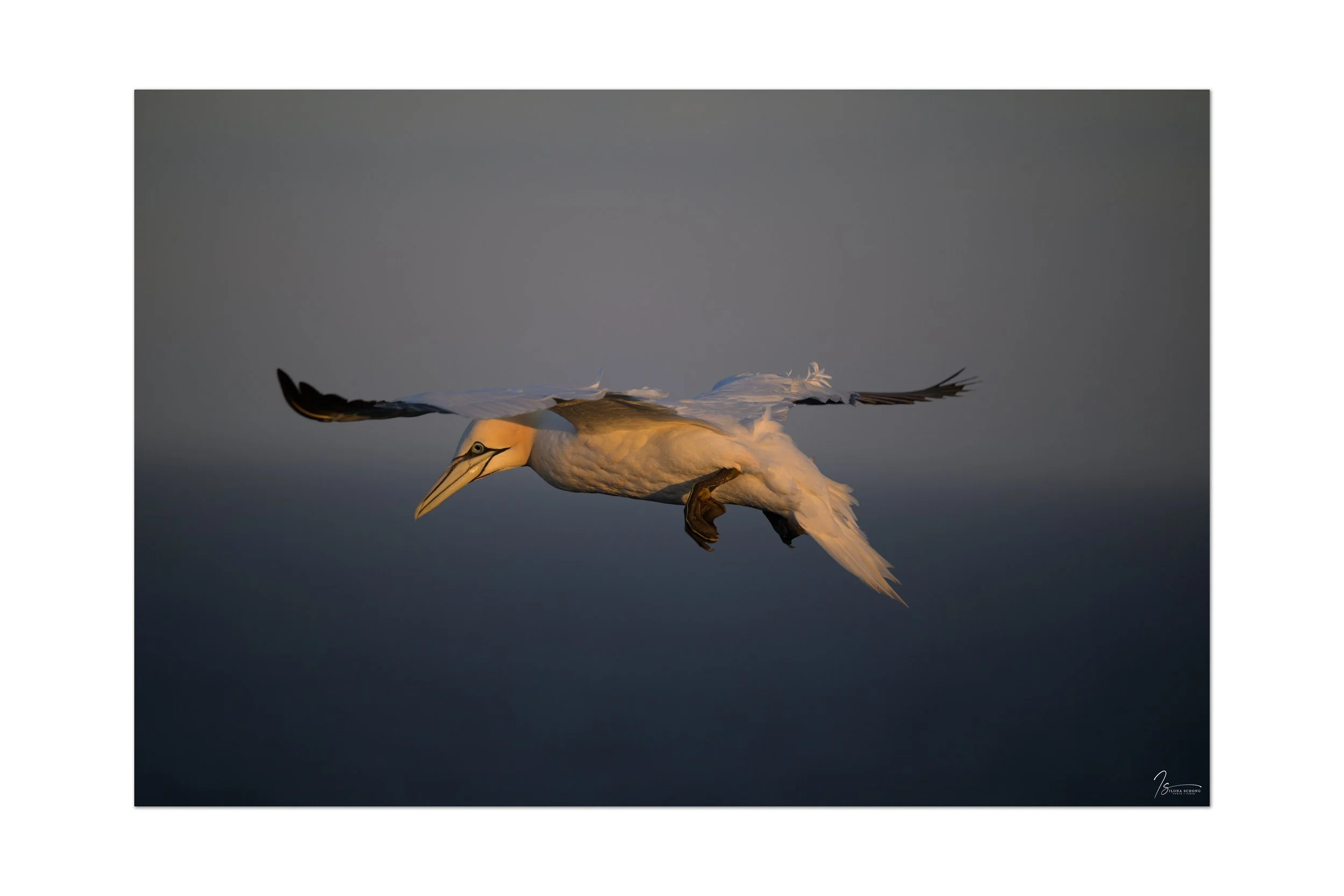
Of course, I also took photos at sunrise and sunset. Once, I had a very photogenic sunrise, where the gannets (which you photograph facing west) were beautifully lit with the sun at my back (pay attention to the shadows you might cast, including those from the fencing, because I’ve regularly made mistakes with that (see photo 2)). There was also one sunset with gorgeous, soft light. Although I mainly aimed for low-key and high-key photography, these sunrise and sunset moments were definitely the most beautiful for me.
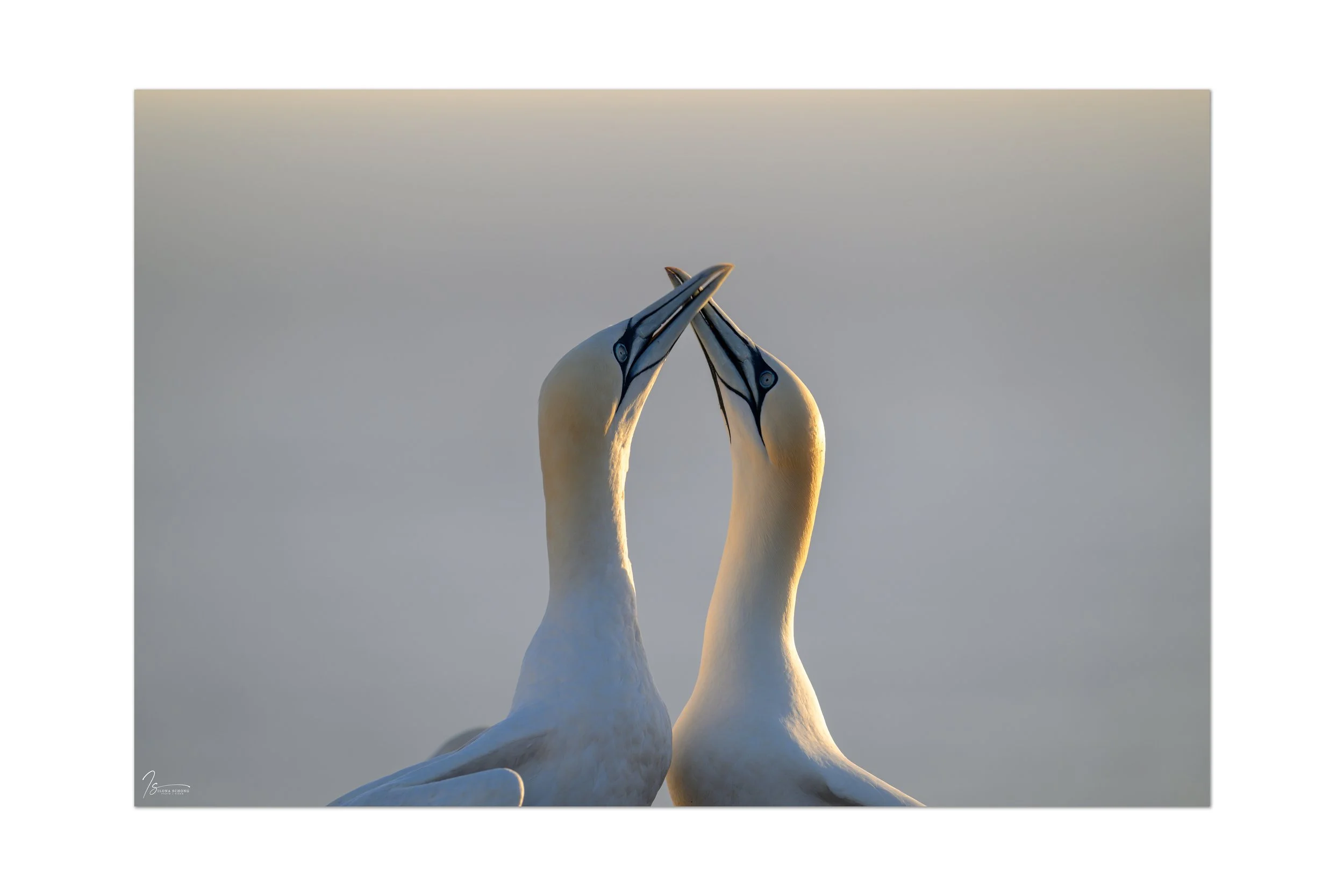
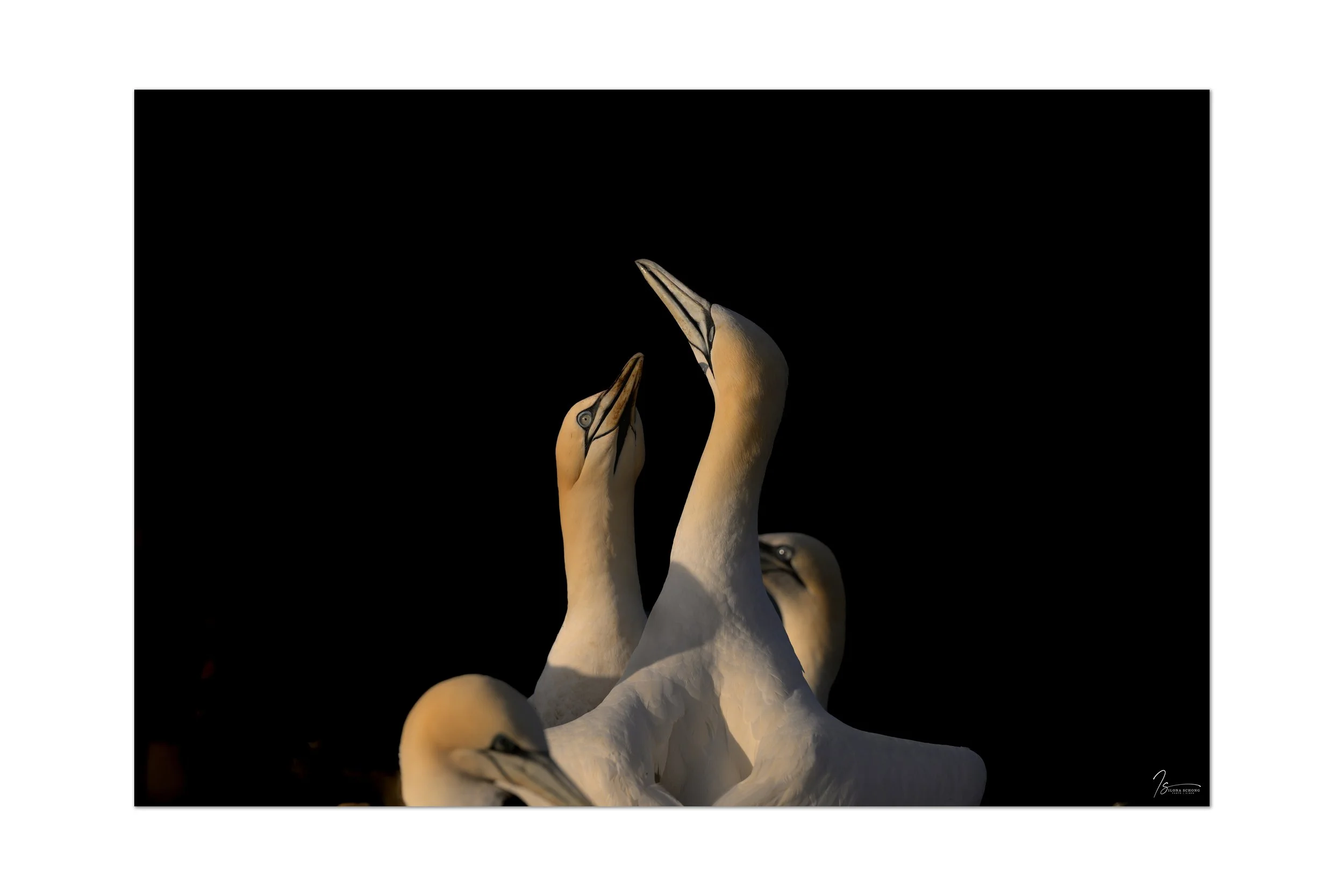
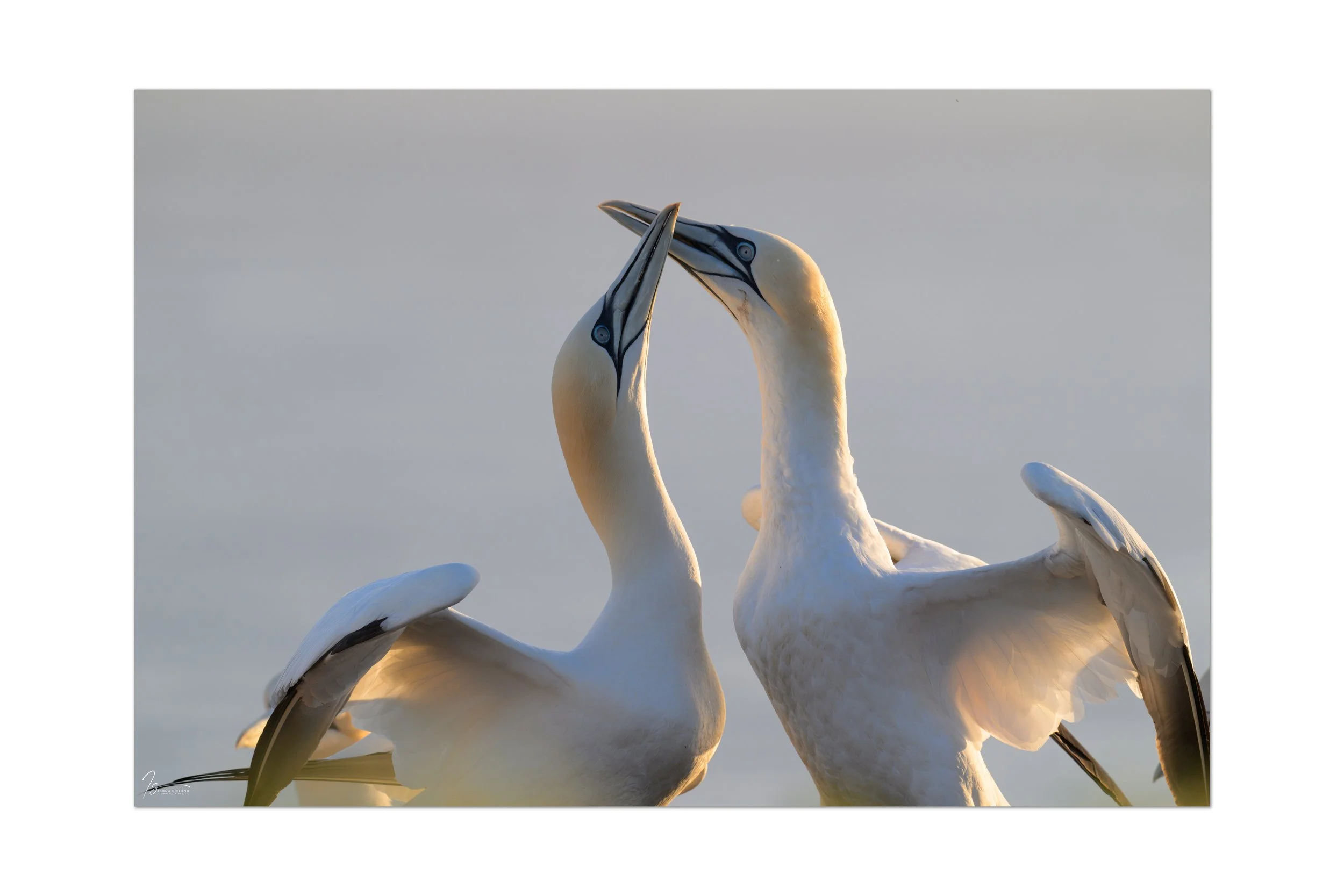
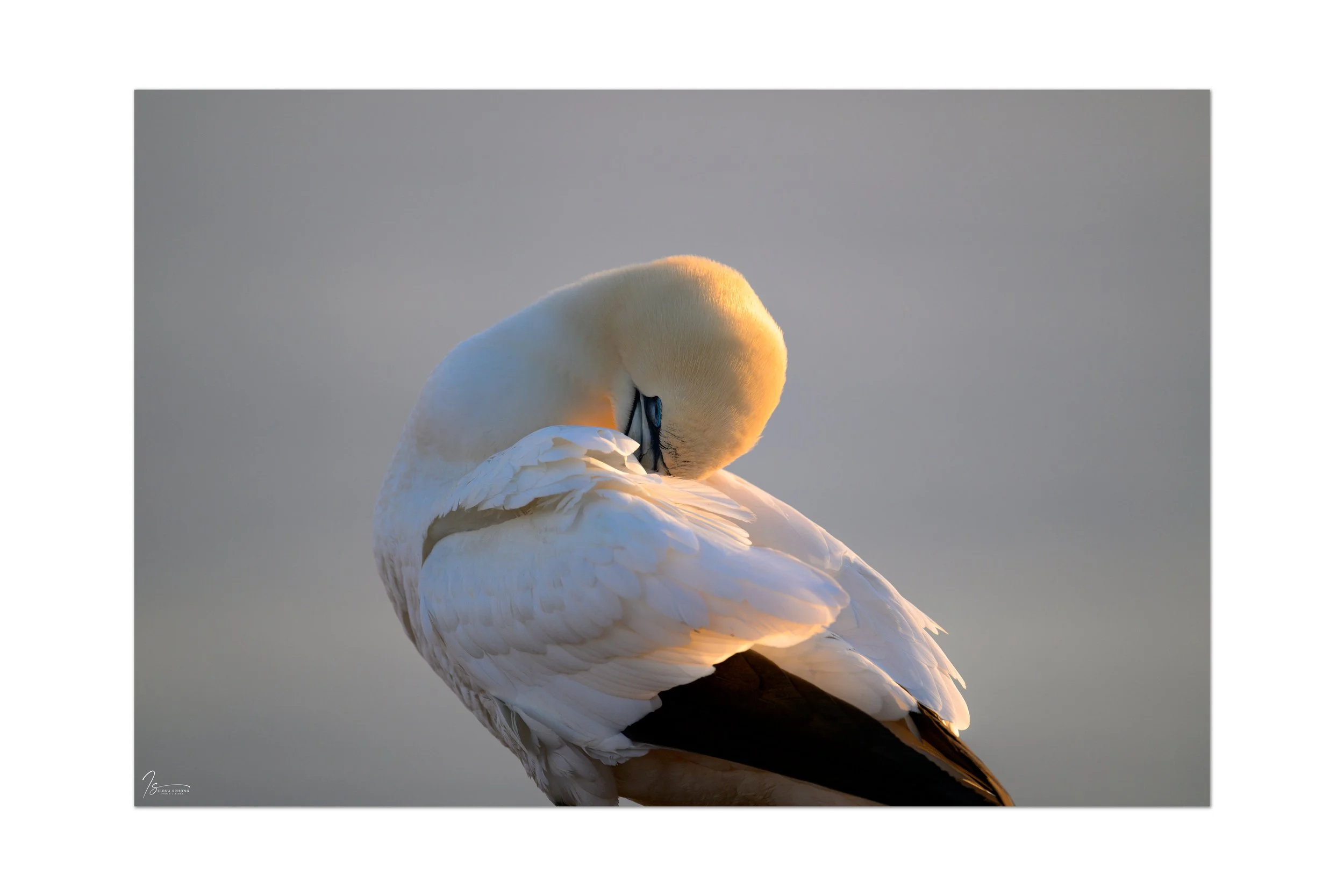
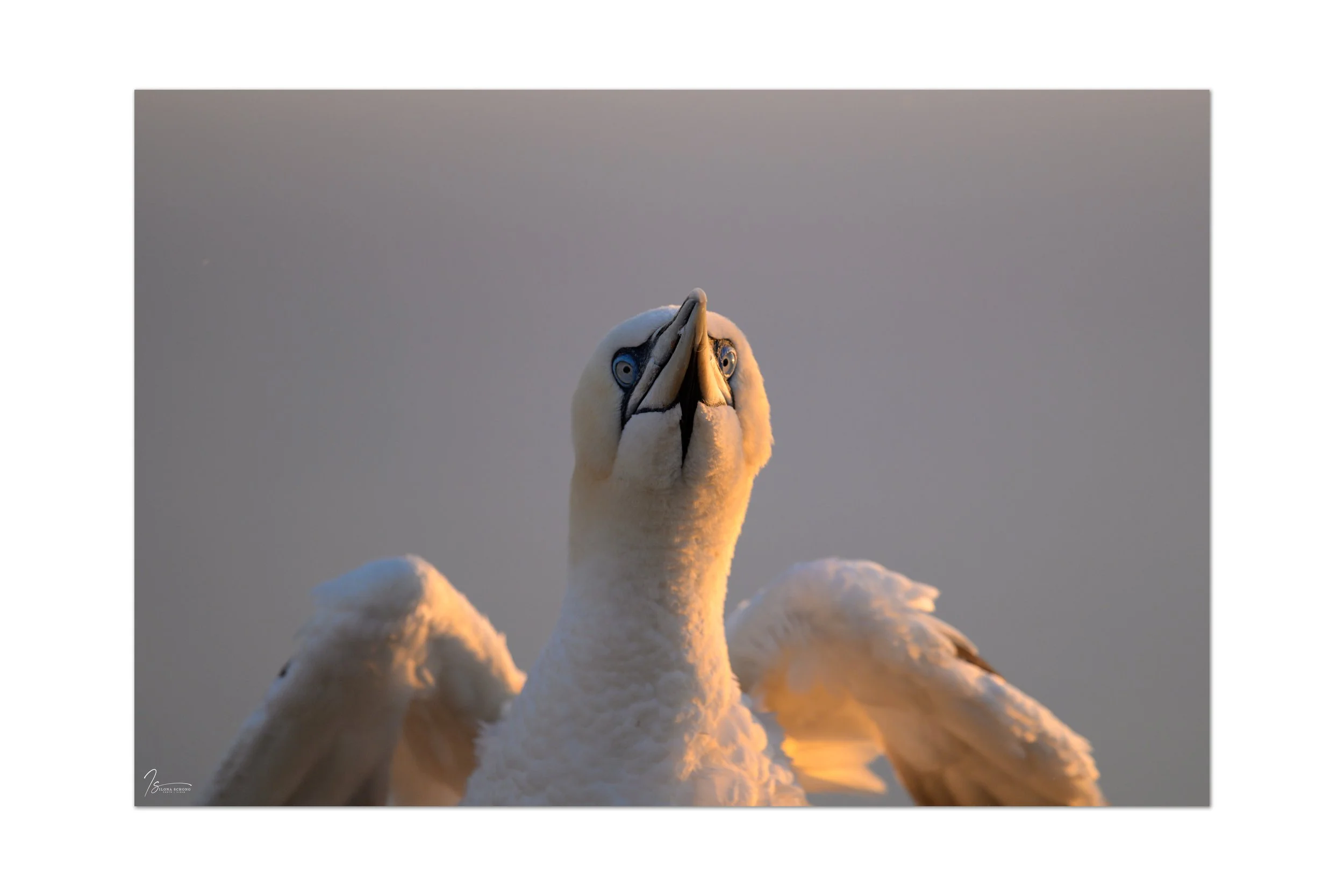
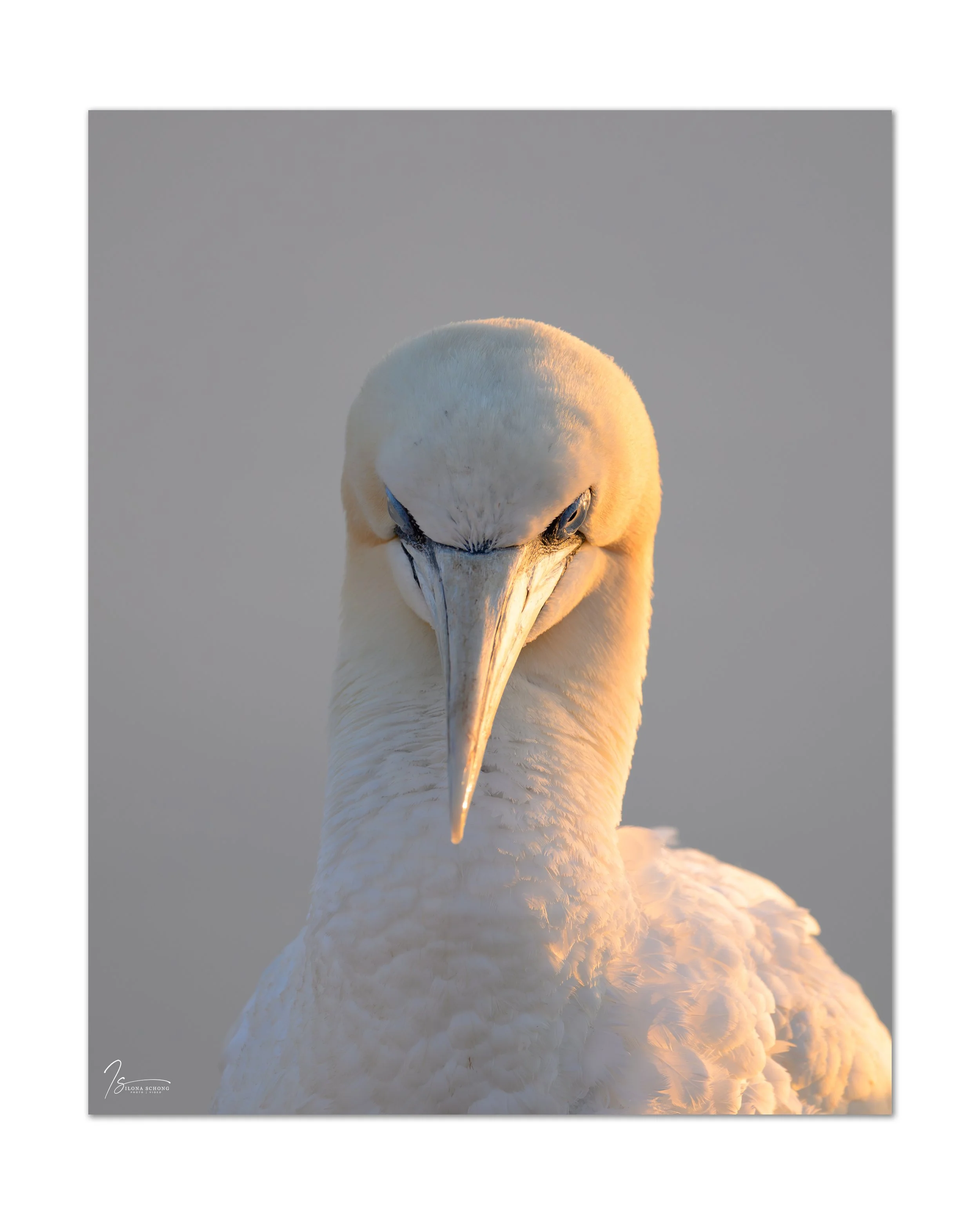
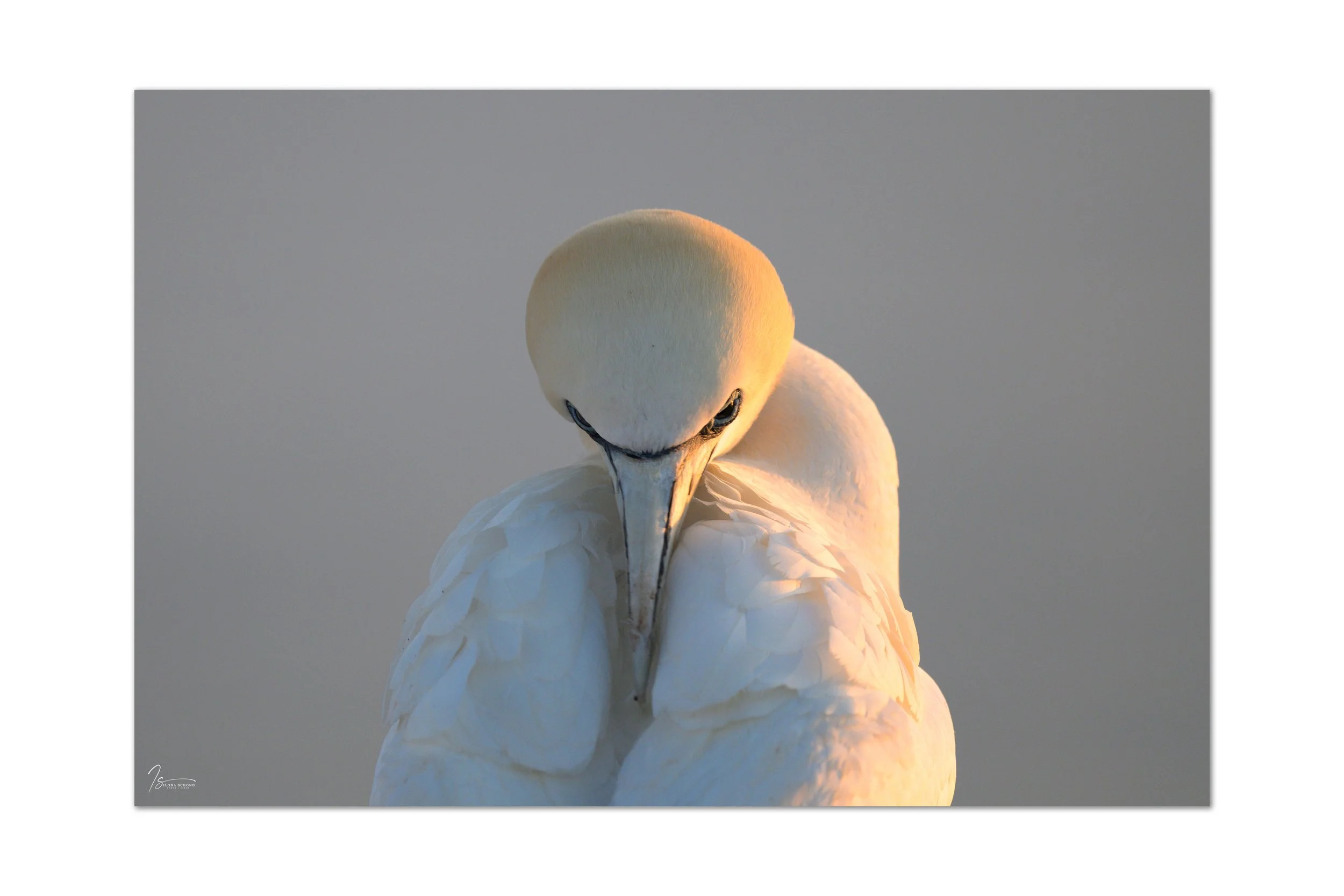
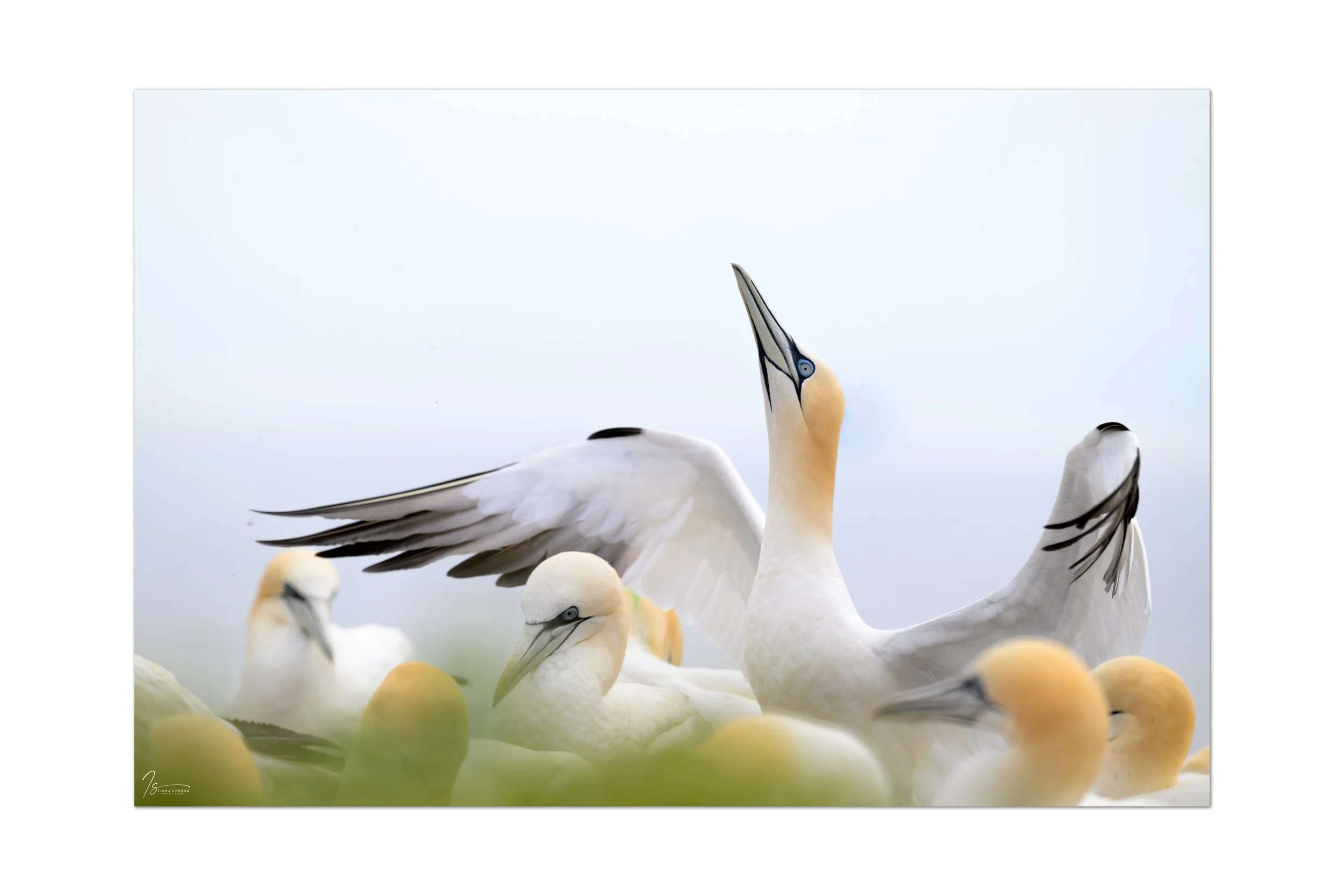
The weather can change quickly on Heligoland. Be sure to bring rain gear and a good cover for your camera bag, because it poured twice. Of course, I could have sought shelter in my hotel room in time, but I loved standing all by myself in the pouring rain near the colony. The gannets’ behavior changes dramatically in bad weather—it gets incredibly busy—and that’s a fantastic experience.
After a night without an early alarm, I boarded the Cassen Eils catamaran at 10:45 a.m. the next morning, feeling well-rested, and headed back to the mainland, looking back on several wonderful and productive days.